




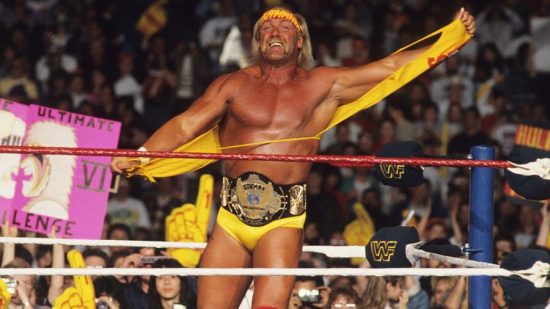
Hulk Hogan, born Terry Bollea, was more than a professional wrestler. He was the face of a generation, a pop culture icon, and the man who took professional wrestling from smoky arenas to sold-out stadiums and living rooms across the world. Early in the morning on July 24, 2025, Hogan died at the age of 71, bringing to a close one of the most legendary and complex careers in sports entertainment history.
Hogan wasn’t just a wrestler. He was a phenomenon. A charismatic and powerful man who was the epitome of being a superstar in the 1980s and beyond. He was the man who slammed André the Giant in front of a purported 93,000 fans. The man whose entrance music could make an entire arena stand up. The man who shockingly turned heel in the mid-90s and made the nWo cool. And the man who, despite a plethora of scandals and setbacks, always found his way back into the spotlight.
The Beginning
Born in Augusta, Georgia, on August 11, 1953, and raised in Tampa, Florida, Terry Bollea’s earliest life dreams weren’t about wrestling. He was a bass guitarist who played with a string of local bands and chased a musical dream. Music was a big part of his life, even going so far as to drop out of the University of South Florida when his studies began to interfere with his music gigs.
Between gigs, Bollea would work out at Hector’s Gym in the Tampa Bay area, beginning to build a muscular physique. A band he formed called Ruckus performed in bars frequented by professional wrestlers in the area. One night, professional wrestling tag team brothers Jack and Gerald Brisco noticed Bollea’s physique and convinced him to train with Hiro Matsuda to become a professional wrestler.
Matsuda was a tough trainer and famously broke Hogan’s leg on his first day of training. After ten weeks of rehab, Hogan would return to the camp and block the move that Matsuda initially broke his leg on (or so the story goes). Hogan would make his professional wrestling debut in 1977. Sporting a massive frame, bleach-blond hair, and incredible presence, he very quickly began to make waves in the regional territories under names like “Sterling Golden” and “The Super Destroyer.”
But it was Vince McMahon and the WWF that would give birth to “Hulkamania.”
Hulkamania Runs Wild
In 1983, after playing a supporting role in the extremely successful “Rocky III” movie and a run in the AWA in Minnesota, Hogan returned to the World Wrestling Federation, and professional wrestling was changed forever.
Fueled by Vince McMahon’s national ambitions and Hogan’s undeniable charisma, the WWF burst into the mainstream. Hogan was the face of a new era of professional wrestling. He was a real-life superhero draped in the American flag, shouting to a generation of kids that you must train, say your prayers, and take your vitamins.
Hogan would headline the first WrestleMania in 1985, teaming with another pop culture icon of the time, Mr. T of “The A-Team.” He headed the classic and successful collaboration with MTV that became “The Rock ‘n’ Wrestling Connection.” This would see him co-host Saturday Night Live with Mr. T, appear on numerous talk shows, and even appear on the cover of Sports Illustrated, unknown territory for any professional wrestler that came before him.
The most famous example of his drawing power occurred in 1987 at WrestleMania III in the Pontiac Silverdome in Michigan. Hogan would put the WWF Championship on the line against the “undefeated” André the Giant. This event drew an alleged 93,000 fans and created an image that has been etched into the memories of perhaps every fan of professional wrestling: Hogan actually slammed the 500-pound behemoth that was André the Giant.
And in 1988, his rematch with André the Giant drew over 33 million viewers, a record 15.2 Nielsen rating, the most-watched match in television history.
At his peak, Hogan wasn’t just the biggest star in wrestling. He was one of the most recognizable people on the planet.
The Hollywood Chapter and a Heel Turn for the Ages
By the early 1990s, Hogan began to turn his eye to a career beyond the ring. He starred in “No Holds Barred,” “Suburban Commando,” and “Mr. Nanny.” He had lunchboxes, vitamins, and even a Saturday morning cartoon show. But a steroid problem in the WWF slowly began to change the wrestling landscape, and Hogan got out before it exploded.
Then came WCW.
Hogan would join the rival promotion in 1994 with full booking control. However, the campiness of the red-and-yellow character had run its course. As Vince McMahon famously said in 1997, “The era of the superhero who urged you to say your prayers and take your vitamins is definitely passé.”
So, in 1996, at Bash at the Beach, Hogan did the unthinkable: he turned heel, joining Scott Hall and Kevin Nash to form the New World Order (nWo), creating a moment that all future heel turns of major stars would be compared to. “Hollywood Hogan” was born. Shedding the red and yellow, Hogan would instead don black, white, and black beard stubble, contrasting his platinum blond Fu Manchu mustache.
This heel turn helped WCW turn the corner in a Monday Night War against the WWF. With Hogan at the helm, WCW would dominate the WWF for 83 straight weeks. It also showed how willing Hogan was to change to stay at the center of the wrestling universe.
Legacy, Controversies, and a Complicated Return
After WCW went out of business in 2001, Hogan would return to the WWF (soon to become WWE) in 2002. Despite returning as a heel in an ill-fated attempt to reform the original nWo, he would be overwhelmingly cheered in a classic match against The Rock at WrestleMania X8. Going back to the red and yellow, he would win his final world title from Triple H in April 2002 at the age of 48. And he would eventually be inducted into the WWE Hall of Fame twice, once in his own right and once alongside the nWo.
Hogan would even turn his family into reality television stars, following the success of Ozzy Osbourne’s “The Osbournes,” another WWE Hall of Famer who passed away on July 22, 2025, by creating the show “Hogan Knows Best.”
But it was not all smooth. Lawsuits, leaked sex tapes, and personal controversies cast shadows over his legacy. WWE would distance itself from him for years, starting in 2015 when a tape of Hogan spouting racist tropes surfaced.
His legacy may well be debated long after his death. Can the man be separated from the myth? Yet somehow, through it all, Hogan remained a presence, whether in video games, documentaries, or surprise returns. He even made a splash in politics, lighting the Republican National Convention on fire as he ripped off his shirt in support of Donald Trump.
The Final Bell
Hogan’s final WWE appearance took place in January 2025 on the debut of Raw on Netflix. His past controversies and penchant for tall tales still shadowing him, Hogan was roundly booed by the crowd in the Intuit Dome.
Hogan passed away from cardiac arrest following complications from surgery, reportedly involving his neck. He struggled with health issues for years, the result of decades of punishing his body in the ring.
Tributes have poured in from across the wrestling world. WWE stated, “Hogan was a global icon, a WrestleMania mainstay, and a true pioneer of our industry. We mourn his loss and celebrate his lasting legacy.” Vince McMahon said, “His grit and unbridled thirst for success were unparalleled – and made him the consummate performer. He gave everything he had to the audience whom he appreciated, respected and loved.” Fans around the globe mourned the man who defined their childhoods.
There will never be another Hulk Hogan. His contributions to professional wrestling are numerous. Vince McMahon had the vision, but Hulk Hogan was the perfect vehicle to drive it forward. It is not hyperbole to say that wrestling as we know it today wouldn’t be what it is without Hulk Hogan.
Rest in peace, Hulk Hogan.